All eyes on Budget 2026 as markets seek clarity amid rising global uncertainty
This article first appeared in Capital, The Edge Malaysia Weekly on September 29, 2025 - October 5, 2025
IT is that time of the year again — when investors turn their attention to the upcoming Budget 2026 for market direction. Positive momentum is already building in the local stock market, which was rattled in the first half of the year by the evolving US tariff policy under President Donald Trump, who was sworn in on Jan 20.
Slated to be tabled on Oct 10, Budget 2026 is expected to offer good news for the construction, consumer and renewable energy sectors.
Investors are anticipating continued government support for infrastructure-related spending, even as the pipeline of mega projects narrows. Mid-sized contractors could benefit from allocations for affordable housing, maintenance works and rural connectivity projects. Nonetheless, analysts note that a sustained development expenditure (DE) commitment will provide earnings visibility for the overall construction counters.
According to CIMB Treasury and Market Research, DE is projected at RM87 billion, slightly higher than the RM86 billion allocation in Budget 2025. This is to reflect the government’s sustained commitment to growth priorities.
The research house expects that DE will be channelled towards infrastructure, digitalisation and the green transition, with flagship 13th Malaysia Plan (13MP) projects, including the LRT Mutiara Line in Penang, the Johor-Singapore Special Economic Zone (JS-SEZ) and major flood mitigation works.

Visit Malaysia 2026 is expected to provide an additional boost to tourism, while ongoing master plans such as the National Industrial Master Plan (NIMP) 2030, National Energy Transition Roadmap (NETR) and National Semiconductor Strategy (NSS) support industrial upgrading.
Affordable housing accessibility is also likely to be prioritised, alongside measures to cushion industries affected by US tariffs. Clarity on the New Investment Incentive Framework, initially scheduled for 3Q2025, is also anticipated in Budget 2026.
Meanwhile, CGS International projected the government’s DE in 2026 to remain at RM86 billion as several major public infrastructure projects are gradually phased out. “The winding down of several mega projects, such as the Johor Bahru–Singapore Rapid Transit System (JB-SG RTS) and the East Coast Rail Link (ECRL), will also reduce the need for a high DE allocation,” it says in a Sept 19 report.
It notes that the DE estimate is broadly in line with the government’s five-year target of RM430 billion under the 13MP, which translates into roughly RM86 billion per year.
TA Securities is expecting a lower DE allocation of RM84 billion in 2026, given the government’s aim of lowering the fiscal deficit to below 3% by 2030.
The research house does not expect new big-ticket public infrastructure projects in the pipeline in the budget, as projects such as the Penang LRT, Automated Rapid Transit in Johor as well as water and flood mitigation projects have already been announced.
“MRT3 could be mentioned, as land acquisitions should be completed in 2026. The KL-Singapore High Speed Rail is a bonus if funders are available under a PPP (public private partnership) scheme,” it said.
As such, TA Securities reckons that companies in the construction sector, including Gamuda Bhd (KL:GAMUDA), IJM Corp Bhd (KL:IJM), Sunway Construction Group Bhd (KL:SUNCON) and TRC Synergy Bhd (KL:TRC), as well as property players such as Sime Darby Property Bhd (KL:SIMEPROP), S P Setia Bhd (KL:SPSETIA), IOI Properties Group Bhd (KL:IOIPG) and Mah Sing Group Bhd (KL:MAHSING) will benefit because of transit-oriented developments and an increase in activity in the data centre space.
Interestingly, UOB Global Economics & Market Research says the Home Ownership Campaign (HOC 3.0) — with extended stamp duty exemptions, higher eligible property price and possible reintroduction of the Developer Interest-Bearing Scheme for properties below RM700,000 — could be part of Budget 2026. It also sees the government expanding affordable housing schemes — such as Rent-to-Own and the Housing Credit Guarantee Scheme (SJKP) — to informal income earners.
Consumer sector supported by rising wages

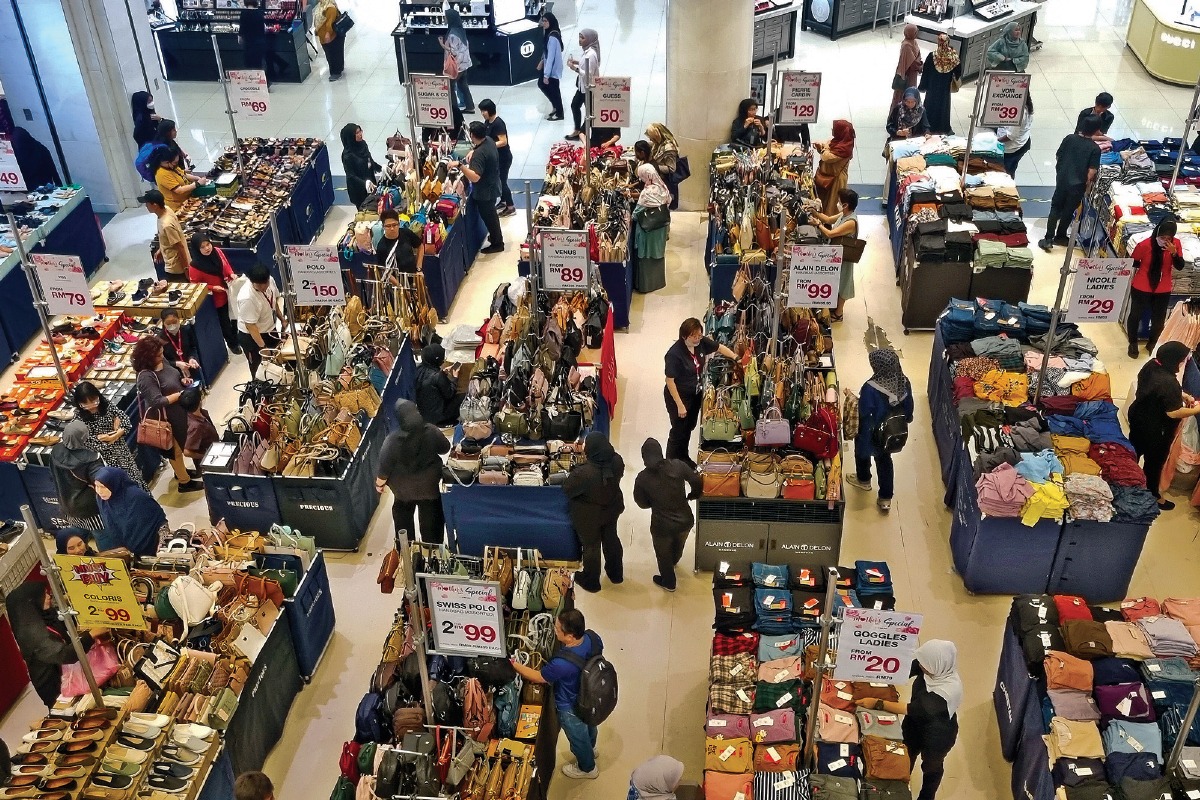
The second phase of the civil service pay hike, set for implementation in January 2026, is expected to boost disposable incomes and, in turn, drive higher consumer spending. Coupled with the roll-out of the new minimum wage policy, this could benefit retailers, food and beverage operators and mass-market consumer goods producers. These shifts come at a time when upcoming subsidy rationalisation may further alter purchasing power dynamics.
TA Securities estimates private consumption growth to strengthen by 6.3% in 2026 from 5.7% this year — supported by higher disposable incomes; ongoing government cash assistance; lower retail fuel prices; accommodative monetary policy, with the overnight policy rate expected to remain low at 2.75% in 2026; spillover effects from Visit Malaysia 2026; and a stable labour market.
“The low-interest-rate environment should also spur credit-sensitive spending, particularly on housing loans, motor vehicles and consumer durables, providing an additional lift to household demand,” it adds.
Meanwhile, CIMB Securities expects consumer spending in the second half of this year to be skewed towards essentials and value-for-money purchases, aided by financial support measures and a higher minimum wage.
It expects companies in the consumer sector, however, to see margins under pressure, owing to rising costs and the 8% sales and service tax rate on leasing, particularly for mall-based retailers. As such, it remains neutral on the sector, with 99 Speed Mart Retail Holdings Bhd (KL:99SMART), Farm Fresh Bhd (KL:FFB) and Padini Holdings Bhd (KL:PADINI) as its top picks.
“We continue to advocate positioning towards defensive, mass-market players that benefit from downtrading and resilient demand,” it says in a Sept 24 note.
Fine-tuning of auto sector and EV policy expected
In tandem with stronger consumer spending, the automotive sector is also expected to benefit from Budget 2026. Industry players are looking out for stronger government support to boost vehicle sales, while makers of electric vehicles (EV) anticipate improved policy initiatives and tax incentives to accelerate Malaysia’s transition to green mobility.
TA Securities expects several key measures introduced in earlier budgets to support the local EV ecosystem, particularly incentives for completely knocked down assembly and charging infrastructure to be extended or enhanced.
“Components for locally assembled EVs are currently exempted from import duties until Dec 31, 2027. We believe these incentives may be extended, as they play a critical role in attracting foreign manufacturers to establish assembly operations in Malaysia, thereby enhancing the local EV ecosystem, strengthening supply chains, and supporting long-term industry growth,” it explains.
“Extending the exemption beyond 2027 is crucial, as long-term incentives provide the policy stability and certainty needed for foreign automakers to commit heavy investments in Malaysia.”
TA Securities has a “neutral” call on the automotive industry, with a “hold” recommendation on Sime Darby Bhd (KL:SIME), and a “sell” call on Bermaz Auto Bhd (KL:BAUTO) and MBM Resources Bhd (KL:MBMR).

RE, utilities still in vogue
With the government committed to its energy transition road map, allocations for green energy projects, incentives for solar adoption and potential financing support could further strengthen the sector’s investment appeal. Renewable energy (RE) players and utility-linked counters are expected to remain in focus for the upcoming Budget 2026.
“We reckon there is a possibility of another round of large-scale solar programme auction under LSS6, following the conclusion of the LSS5+ award earlier this month, alongside potentially a second round of Battery Energy Storage System auction to accommodate increased solar penetration in the grid,” says TA Securities.
Aside from the RE sector, it expects that Budget 2026 could also highlight gas power purchase agreement extensions and the roll-out of new gas power plants as outlined by the Energy Commission’s latest tender for up to 8gw of gas power generation capacity between 2025 and 2029.
TA Securities’ top picks in the RE sector include Samaiden Group Bhd (KL:SAMAIDEN), Solarvest Holdings Bhd (KL:SLVEST), Sunview Group Bhd (KL:SUNVIEW), Pekat Group Bhd (KL:PEKAT) and Northern Solar Holdings Bhd (KL:NORTHERN). It also likes players in the gas power generation: Malakoff Corp Bhd (KL:MALAKOF) and Tenaga Nasional Bhd (KL:TENAGA).
O&G sector focus on carbon capture
TA Securities highlights oil and gas players among the beneficiaries of the upcoming Budget 2026 — MISC Bhd (KL:MISC) and Malaysia Marine and Heavy Engineering Holdings Bhd (KL:MHB).
“Overall, we would view Budget 2026 as slightly favourable for the oil and gas sector if it introduces direct allocations and financing mechanisms to accelerate carbon capture, utilisation and storage (CCUS) execution, including hub development in Sarawak and Kerteh [Terengganu],” it says.
“We also anticipate measures to integrate CCUS with Bursa Malaysia’s carbon trading platform, alongside risk-sharing instruments to improve the bankability of large-scale projects.”
Attention on semiconductor sector
Finance Minister II Datuk Seri Amir Hamzah Azizan has hinted that the semiconductor industry will receive more attention under Budget 2026, in line with the aspirations of the NSS.
“The government [has] a role to play in how to stimulate, deepen and support the development of this industry in the future. I believe that, in this budget, we will place greater emphasis on important industries like semiconductors, and there will be news of the government’s commitment to further boost this segment,” he told reporters last week after chairing the Penang leg of the Budget 2026 Roadshow programme.
This is attention on semiconductors is especially important, as the sector comprises about 40% of the country’s exports and has been under pressure since the beginning of the year because of tariff uncertainties. Although the US and Malaysian governments agreed to reciprocal tariffs of 19%, it remains unclear whether sector-specific tariffs on semiconductors will be imposed. Earlier, Trump had threatened a 100% tariff on chips manufactured outside the US — a move that, if implemented, could disrupt global supply chains.
While infrastructure, consumer spending, RE and semiconductor development are expected to receive continued support, the government is also mindful of narrowing its fiscal deficit by 2030.
For investors, Budget 2026 could provide greater clarity on long-term policy priorities, with potential beneficiaries ranging from mid-sized contractors and consumer players to RE and semiconductor counters.

Save by subscribing to us for your print and/or digital copy.
P/S: The Edge is also available on Apple's App Store and Android's Google Play.
The content is a snapshot from Publisher. Refer to the original content for accurate info. Contact us for any changes.
Related Stocks
| 99SMART | 3.470 |
| BAUTO | 0.835 |
| BURSA | 8.830 |
| CIMB | 7.970 |
| FFB | 2.510 |
| GAMUDA | 4.150 |
| IJM | 2.330 |
| IOIPG | 3.290 |
| MAHSING | 1.050 |
| MALAKOF | 0.775 |
| MBMR | 4.980 |
| MISC | 8.700 |
| NORTHERN | 0.635 |
| PADINI | 1.820 |
| PEKAT | 1.290 |
| SAMAIDEN | 1.000 |
| SAMAIDEN-WA | 0.270 |
| SIME | 2.460 |
| SIMEPROP | 1.420 |
| SLVEST | 2.020 |
| SLVEST-WA | 1.340 |
| SPSETIA | 0.935 |
| SUNCON | 6.780 |
| SUNVIEW | 0.355 |
| TENAGA | 14.200 |
| TRC | 0.320 |
Comments