IPO/PRIVATISATION: IPO boom amid privatisation trend
This article first appeared in Capital, The Edge Malaysia Weekly on December 29, 2025 - January 4, 2026
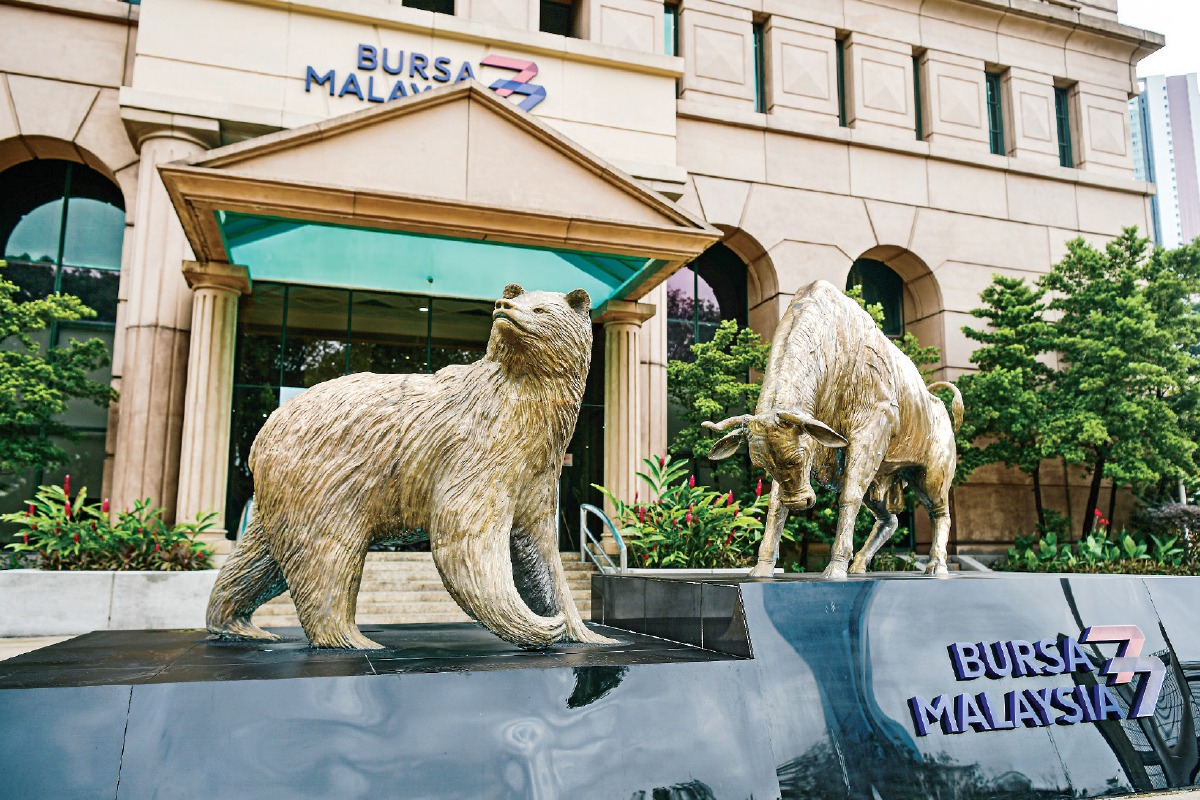
EVEN as overall trading activity on the local stock market remained subdued this year, Bursa Malaysia hit its target of 60 initial public offerings (IPOs), placing Malaysia top of the Asean IPO market in terms of listing numbers.
But underscoring the competition for investor interest, the stock exchange intends to shift its focus from the number of listings to scale, with the aim of deepening the Main Market and enhancing its international appeal.
A series of high-profile privatisation exercises last year also highlighted valuation gaps and shifting strategies among listed companies.
Of the new listings in 2025, 11 were Main Market, 44 ACE Market and five LEAP Market.
The five dozen listings marked the highest in the past two decades and collectively raised about RM6 billion in proceeds, and added more than RM32 billion to the market capitalisation of the stock exchange.
While the number of listings in 2025 exceeded the IPOs in 2024, total funds raised were less than the RM7.4 billion raised last year, reflecting cautious market sentiment amid uncertainty stemming from US reciprocal tariffs.
More IPOs but fewer winners

Most importantly, the ability to sustain share price performance and financial results is critical to building investor confidence in Malaysia’s IPO market. Of the 55 companies listed on the Main Market and ACE Market this year, two-thirds — or 36 firms — were trading below their IPO prices as at Dec 19. Worryingly, some of the underperformers have even lost more than half of their IPO price after being listed for such a short time.
Among the biggest laggards on the Main Market was water purifier firm Cuckoo International (MAL) Bhd (KL:CKI), which had tumbled 50.46% against its IPO price of RM1.08 — revised downward from RM1.29 initially.
Others were welded pipe manufacturer Pantech Global Bhd (KL:PGLOBAL) (-34.56%), high-precision engineering and manufacturing firm UMS Integration Ltd (KL:UMSINT) (-13.2%) and geotechnical firm Geohan Corp Bhd (KL:GEOHAN) (-12.73%).
The ACE Market was not spared the dismal performance as several counters were severely battered, including automotive parts distributor MSB Global Group Bhd (KL:MSB) (-55%), specialty and industrial chemicals firm SumiSaujana Group Bhd (KL:SUMI) (-52.08%) and engineering firm West River Bhd (KL:WESTRVR) (-48.72%).
The poor showing likely in part prompted a review of IPO criteria.
“What we need are larger companies, because foreign investors generally cannot invest in small firms. They require bigger companies with enough liquidity. Malaysia still lacks large-sized companies that are growing and generating good returns on equity,” Finance Minister II Datuk Seri Amir Hamzah Azizan was quoted as saying recently.
On the brighter side, HI Mobility Bhd (KL:HI) emerged as the best-performing Main Market IPO, its share price doubling from its retail price of RM1.22. Oriental Kopi Holdings Bhd (KL:KOPI) and Lim Seong Hai Capital Bhd (KL:LSH) were the standout performers on the ACE Market, as their market cap surged past the RM1 billion mark to RM2.68 billion and RM1.57 billion respectively.
Dubbed the “IPO king of 2025”, Oriental Kopi’s share price tripled to RM1.34 as at Dec 19 from 44 sen, while shares of Lim Seong Capital — which transferred its listing from the LEAP Market — doubled to RM1.87 over its listing price of 88 sen.
Several sizeable Main Market listings are expected in 2026, including Sunway Healthcare Holdings Bhd (the healthcare arm of Sunway Group), Chubb Insurance Malaysia Bhd (the Malaysian unit of US insurance company Chubb Ltd) and Penang-based chip design firm SkyeChip Bhd.
Fortress Capital founder and CEO Datuk Thomas Yong observes that the IPO strength has been uneven, with activity concentrated in certain sectors, deal sizes and investor narratives rather than being broad-based across the market. That said, he notes that compared to several regional peers, Malaysia continues to offer relatively attractive entry valuations, especially for domestic-oriented or cash-generative businesses.
He expects technology-enabled services and industrial technology, healthcare and education, consumer and services, and select renewable energy and sustainability-linked businesses to dominate the IPO pipeline over the next 12 to 18 months.
With more than 50 prospectus exposures currently underway, Deloitte Malaysia capital markets services partner Wong Kar Choon expects consumer, energy and resources-related companies to dominate the pipeline, as these sectors have shown more sustainable post-listing performance.
At the same time, he notes that the market’s emphasis will shift towards “quality over quantity”, with a stronger focus on large-cap and sector-relevant listings.
Wong attributes the continued resilience of the IPO market to government initiatives and regulatory enhancements, including tax deductions of up to RM1.5 million on listing expenses, collaboration with related agencies to support growth of small and medium enterprises and mid-tier companies, as well as improved sustainability reporting requirements that have strengthened market transparency and Malaysia’s appeal as a preferred listing destination.
Baker Tilly Malaysia managing partner (audit and assurance) Datuk Lock Peng Kuan points to Bursa’s consultative approach as a key driver sustaining IPO momentum.
“Companies are now able to engage earlier and understand whether they are suitable to list, not just from a financial perspective but also from a qualitative perspective,” he says.
This, he adds, has broadened the range of companies considering a listing, including the first pawnbroking business, online commerce platform and digital content creation company to list on Bursa, reflecting greater support to evolving business models and new economy sectors.
To further strengthen Malaysia’s IPO and merger and acquisition ecosystem, PwC Malaysia deals partner Chan Weng Fai suggests several reforms, such as the setting up of a one-stop digital portal integrating the Securities Commission Malaysia (SC), Bursa Malaysia and the Ministry of Investment, Trade and Industry processes with transparent timelines; safeguarded dual-class share structures to help retain high-growth tech companies; and proportionate sustainability reporting for ACE Market issuers.
Additional enhancements that could be undertaken are fast-track IPO routes for equity crowdfunding or peer-to-peer “graduates” and broader Asean passporting or secondary-listing reciprocity to deepen investor access and improve market vibrancy. Notably, UMS Integration was the first Singapore-listed company to undergo secondary listing in Malaysia this year.

Revamp of listing rules
Heading into 2026, attention is turning to potential changes to the Main and ACE Market listing requirements, following a consultation paper issued by the SC. Proposed changes include raising the net profit threshold for Main Market admissions, allowing some flexibility in assessing listing candidates’ operating cash flow and strengthening sponsor-driven oversight of the ACE Market.
Under the proposal, the minimum requirement for the most recent annual profit after tax (PAT) will be raised to RM15 million from RM6 million currently, while the three-year aggregate PAT will be increased to RM30 million from RM20 million.
What stands out to Baker Tilly’s Lock is the heavier weighting placed on the most recent year’s PAT, with the RM15 million threshold accounting for half of the total required RM30 million track record — a significantly higher proportion than under the current framework.
“This structure may be more suited to companies experiencing strong growth momentum, rather than companies with long-established operations that grow steadily in line with the broader economy. Such companies may have sustainable business models and consistent long-term performance, but the higher latest-year requirement could make qualification more challenging.
“If the intention is to encourage companies with rising profit trends, then the new requirement works well for high growth or scalable businesses, particularly in fast-expanding sectors.”
He suggests a recalibration between the cumulative track record and the most recent year’s requirement may help accommodate both high-growth and steady-growth companies.
Lock also believes policy adjustments may be needed to attract larger market capitalisation companies, as exchanges regionally and globally are competing for the same pool of companies.
Another area worth revisiting, he says, is the “one share, one vote” rule.
“Other markets have allowed structures where certain shares carry multiple voting rights, giving founders comfort to list while retaining control during early stages of growth. This has been a factor in attracting innovative and high-growth companies, including unicorns. Re-examining this could help Malaysia attract or retain the next generation of high-growth companies,” he adds.
Overall, Lock expects manufacturing — particularly export-oriented or specialised players — to be a key component of the IPO pipeline. Other sectors likely to draw investor interest are healthcare, food and beverage, and real estate investment trusts.
“Private equity-backed companies are expected to feature more prominently. In recent years, there has been visible consolidation across several industries, in particular the retail industry, and this often signals preparation for eventual listing once scale and operational efficiency are achieved,” he says, adding that new economy and asset-light business models will be another area to watch.
Privatisation: Selective but ongoing
The year also saw several privatisation attempts involving high-profile names such as FGV Holdings Bhd, Genting Malaysia Bhd (KL:GENM) and Malaysia Airports Holdings Bhd (MAHB), though not all were successful.
Genting Bhd’s (KL:GENTING) bid to privatise GenM faltered as it secured less than a 75% stake in the latter, following an independent adviser’s recommendation for shareholders to reject the RM2.35-per-share offer, because of the steep discount and the stock’s easy tradability.
Similarly, Magni Vantage Ltd’s attempt to take FACB Industries Bhd (KL:FACBIND) private at RM1.60 apiece did not materialise, as it ended the offer period with a 57.63% stake in the bedding products manufacturer. Magni Vantage is controlled by 43-year-old Chen Yiy Fon, son of the late gambling tycoon Tan Sri Dr Chen Lip Keong.
At Kim Hin Industry Bhd (KL:KIMHIN), chairman Chua Seng Huat and his family’s offer to privatise the ceramic tile maker at 85 sen apiece also failed to gain sufficient traction. The offerors only controlled 68.34% of the company after the takeover offer period ended, against a 62.25% stake held prior to the corporate exercise.
Nonetheless, Scientex Bhd (KL:SCIENTX) appears closer to privatising its subsidiary Scientex Packaging (Ayer Keroh) Bhd (KL:SCIPACK), following a Nov 24 extraordinary general meeting where shareholders representing 99.65% in value approved a selective capital reduction and repayment exercise. The proposal is now pending High Court approval.
Federal Land Development Authority (Felda), meanwhile, successfully completed its RM1.30-per-share takeover of FGV, which was subsequently delisted in August, despite the offer being below the independent adviser’s estimated fair value of RM1.83 to RM1.99 a share. Note that Felda had in 2020 first launched its privatisation bid for FGV, also at the same price of RM1.30 apiece.
Airport operator MAHB was delisted in February, following a takeover by a consortium led by Khazanah Nasional Bhd and the Employees Provident Fund at RM11 per share.
According to Deloitte’s Wong, as listed companies in asset-heavy sectors often trade below intrinsic value, privatisation is seen as a means to unlock full asset potential without public market discounts.
“It also enables strategic realignment and operational agility, particularly for businesses undergoing major capital expenditure cycles. Ultimately, as long as the valuations are compelling, privatisation will remain an option for companies seeking to optimise long-term growth.”
Fortress Capital’s Yong notes that privatisation is likely to remain selective and opportunistic rather than systemic.
“Controlling shareholders will continue to evaluate go-private options where public market valuations lag intrinsic or long-term value, particularly for asset-heavy or restructuring stories. However, without a broad repricing in the secondary market, we should not expect an acceleration in delisting,” he adds.
PwC’s Chan believes the availability of funding — from both domestic banks and a growing pool of private credit investors — is supporting these take-private exercises, particularly for cash-generative and collateral-rich businesses.
“For many conglomerates, privatisation also enables group rationalisation and portfolio clean-ups, with the option to return to the market when the equity story and valuation outlook become more attractive,” he explains.
Other notable privatisation deals proposed this year include UEM Edgenta Bhd (KL:EDGENTA) at RM1.10 per share, and DKSH Holdings (M) Bhd (KL:DKSH) at RM6.15 apiece, although the latter is facing pushback from its largest minority shareholder, Singapore-based Pangolin Investment Management Pte Ltd.
Looking ahead, Yinson Holdings Bhd (KL:YINSON) is seen as a potential privatisation candidate, with The Edge, quoting sources, reporting in October that the Lim family is close to finalising plans to privatise the floating, production, storage and offloading (FPSO) outfit.
In a research note earlier in October, Maybank Investment Bank flagged Sarawak Oil Palms Bhd (KL:SOP) and Hap Seng Plantations Holdings Bhd (KL:HSPLANT) as possible privatisation targets, citing compelling valuations and strong cash positions.
Save by subscribing to us for your print and/or digital copy.
P/S: The Edge is also available on Apple's App Store and Android's Google Play.
The content is a snapshot from Publisher. Refer to the original content for accurate info. Contact us for any changes.
Related Stocks
| BURSA | 8.830 |
| CKI | 0.520 |
| DKSH | 5.920 |
| EDGENTA | 1.060 |
| FACBIND | 1.660 |
| GENM | 2.000 |
| GENTING | 2.620 |
| GEOHAN | 0.330 |
| HI | 2.250 |
| HSPLANT | 2.150 |
| KIMHIN | 0.850 |
| KOPI | 1.120 |
| LSH | 1.900 |
| MSB | 0.080 |
| PGLOBAL | 0.455 |
| SCIENTX | 3.670 |
| SCIENTX-WC | 0.005 |
| SCIPACK | 1.500 |
| SOP | 4.100 |
| SUMI | 0.115 |
| SUNWAY | 5.630 |
| UMSINT | 4.640 |
| WESTRVR | 0.210 |
| YINSON | 2.320 |
Comments
